

01242 862 173
Call us 8am-5pm Mon-Fri


The UK's No.1 Ceiling Tile Supplier
Quality
Tiles. Expert Advice. Fast Delivery.


 Start a new search
tiles matching your search. Scroll down to see results.
1
2
3








Replacement Suspended Ceiling Tiles Overview
So, you need to replace some ceiling tiles. Before you start to panic, let us reassure you that you probably won’t need to fork out on a completely new system. One of the many wonderful benefits of a dropped ceiling is that you can replace any damaged tiles individually. This saves you the time, cost and hassle of replacing the entire ceiling.
Our ceiling experts can help identify your existing panels and recommend new replacement ceiling tiles – helping you get your commercial ceiling back in top condition without breaking the bank. For more information, please don’t hesitate to get in touch.
How Often Do Ceiling Tiles Need Replacing?
Your lowered ceiling tiles should be replaced as needed, depending on their condition and usage. With proper maintenance, most ceiling tiles can last from 10-15 years, proving great value for money.
When to Replace Your Ceiling Tiles
If your suspended ceiling is correctly specified for your workplace, you shouldn’t need a ceiling tile replacement for a long time. With that said, there are a few tell-tale signs that indicate your suspended ceiling needs replacing. These include:
1. Cracks and Crumbling
Visible damages such as cracks and crumbling can occur if your ceiling tiles come into any form of physical contact. This can create gaps in your false ceiling that will impact its performance, insulation and also look unsightly from below. We therefore recommend that you replace the damaged tiles as soon as possible.
To prevent this in the future, you might want to consider replacement ceiling tiles drop ceiling options that have a high impact resistance.

2. Discolouring
Discoloured ceiling tiles can occur due to the build up of mould over time. If this is your current situation, we recommend that your first step is to check your utilities to ensure nothing is broken or leaking. This may be the cause of your problem.
Certain wipeable ceiling tiles can be easily cleaned, however, it’s likely that the problem will show up again. If this is the case, it could be worth replacing the entire ceiling with high humidity resistant ceiling panels. For more information, we recommend reading our guide on how to specify tiles for high humidity areas. It includes a handy video we think you’ll appreciate.
3. Impact on Performance
Another key indicator that your ceiling tiles need replacing is a change in performance. An inability to concentrate in the office, for example, could be due to poor acoustic performance from your ceiling. Headaches, migraine and eye strain can all occur from low light levels if your suspended ceiling is no longer properly reflecting natural daylight.
If you’re noticing changes in how your business operates, we recommend that you get in touch with our specialists. We have the technical experience to help evaluate your bespoke situation and provide an effective ceiling to better support the needs of your workplace.
4. Sagging and Water Damage
Swimming pools, kitchens and other work environments with high moisture levels may notice their suspended ceilings start to warp or show water rings. This is an indication of poor specification. You should have high humidity ceiling tiles installed as they are specifically designed to tolerate such extreme conditions.
Why You Should Replace Your Ceiling Tiles
- Maintain Appearance – One of the primary reasons businesses replace their drop ceiling is appearance. Moisture damage, mould and cracks on the tile’s surface all have a huge impact on the overall suspended ceiling design. In fact, untreated damages can reflect poorly on your brand and even turn away potential sales and customers.
- Maintain Performance – As it’s not visible, any changes to your ceiling’s performance are often overlooked. In fact, breakages in your ceiling surface, for example, can create gaps for noise to escape. This will make it impossible to achieve a soundproof suspended ceiling. It will then also have knock on effects, such as impacting the privacy of your room, communication quality and the overall performance of your workplace.
- Avoid Injuries – Warped ceilings need to be combatted quickly. If left, the misshapen ceiling tiles can fall out of the ceiling grid and cause harm. To prevent potential accidents in the workplace, you will need to replace the damaged ceiling panels as soon as possible.

How Much Does it Cost to Replace Ceiling Tiles?
The cost of replacing ceiling tiles will depend on the product you order. Prices are clearly outlined on each individual product page on our website, ranging from around £38.00 to £485.
Investing in a suspended ceiling is a great way to save money in the long run. Unlike alternative commercial ceilings, when your drop ceiling tiles need replacing, you can swap out only the affected panels. This saves you the material and installation costs of replacing the entire system. For more information, read our guide on how much a suspended ceiling costs.
How to Identify Replacement Ceiling Tiles
How do you match your replacement ceiling tiles to your existing system? It’s not always as simple as we’d like it to be. The best way is to look at the tile’s back. Some manufacturers, such as Zentia, print their name and/or product codes on the back of their suspended ceiling tiles. You can enter this product code into the search bar on the website to find the exact match and order your replacement ceiling tiles.
If you’re unable to find any information on the back of your tile, this video guide explains more ways to find replacement ceiling tiles:
You can also read our guide on how to identify your ceiling tiles.
For more help identifying your suspended ceiling tiles, send our team a picture! Our identification tool includes a guide on the best images we need to identify your existing system.
How to Replace Ceiling Tiles
A lay-in suspended ceiling tile is very easy to replace. Even newbies to DIY can quickly swap suspended ceilings using the following steps:
- Remove the damaged tiles – Remove your damaged tiles by carefully lifting them up above your ceiling grid. Then, angle the tile and lower it through the gap in the gridwork.
- Install replacement ceiling tiles – Your new ceiling tiles can then be fitted using a similar method in reverse. Angle the tile and lift up through the gap in the ceiling grid. Then, gently lower the tile into place.
For more information, we recommend that you read our step-by-step suspended ceiling installation guide. This includes a PDF for you to print off and take to site, as well as a video guide.
How to Replace a Suspended Ceiling
If you find that you need to replace your ceiling due to an incorrect product specification, you’ll need to replace the entire suspended ceiling – including the ceiling grid! But, this doesn’t need to be as much hassle as you initially think.
Our all-in-one suspended ceiling kits are designed to make building your system quick and easy. These complete packages include everything you need to replace tile ceiling systems:
- Suspended ceiling tiles
- Main runners
- Cross tees
- Edge trim
- Suspension wire
- Ceiling Fixings
With a variety of options available from our website, you can easily find a package to suit the bespoke needs of your workplace.
Our ceiling experts at Ceiling Tiles UK are also on hand to help. Our kits even have a suspended ceiling calculator that provides a quick quote so you know exactly how much your new ceiling will cost.
Appearence
Hover over an image below to magnify.

Basic Fissured
Typically entry-level products, widely used in many environments including offices and retail.
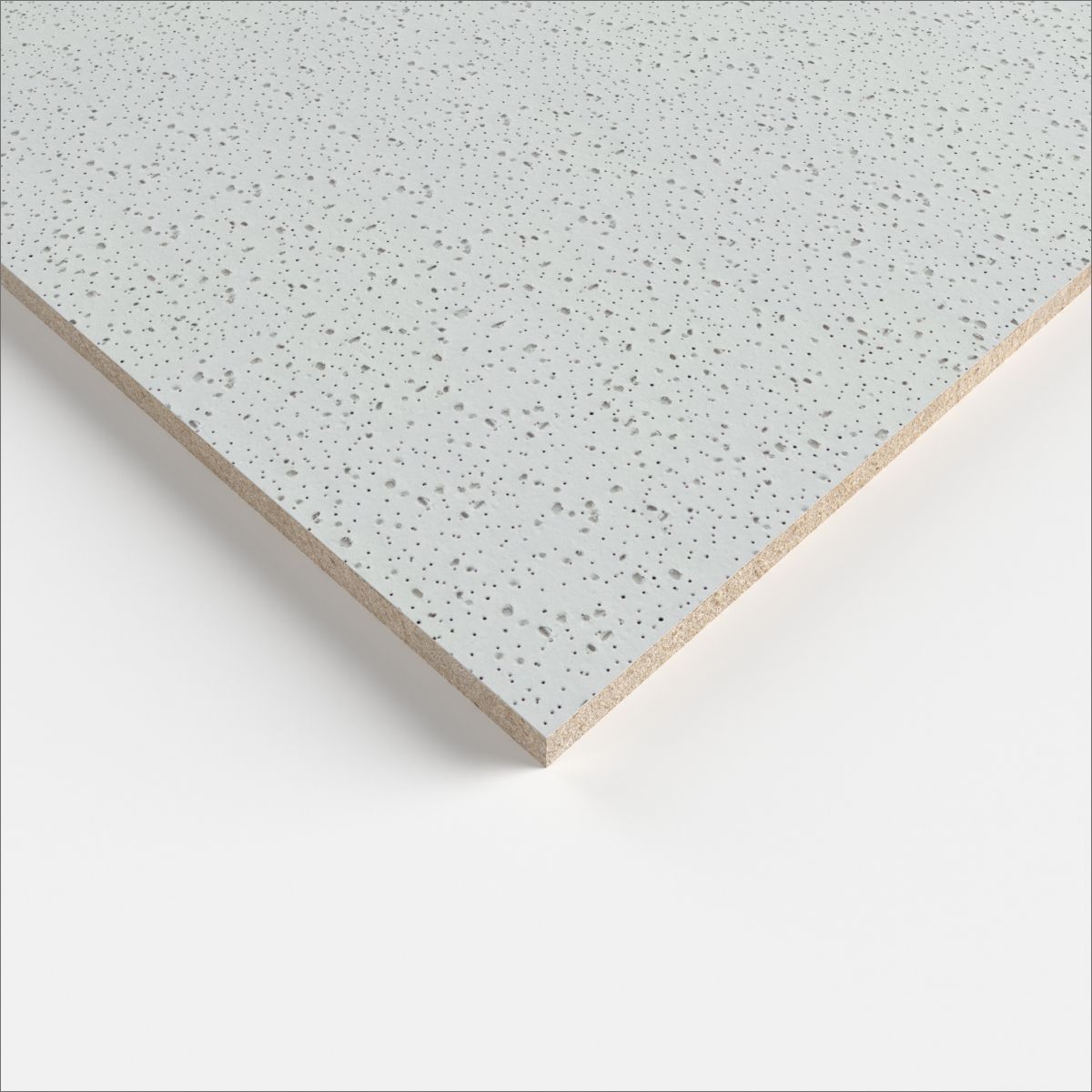
Fine Fissured
A finer texture than basic fissured and a step up in performance and appearance.

Sand Textured
Mineral fibre tiles with a sand textured surface, often with small pinholes to increase sound absorption. These tiles offer all-round performance at a reasonable price making them suitable for a wide range of environments.
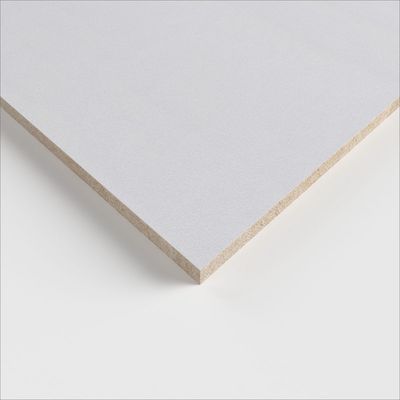
Smooth Insulated
Tiles of rockwool or glasswool composition with a smooth painted face. These tiles combine a clean modern look with excellent sound absorbing properties to suit a range of budgets.
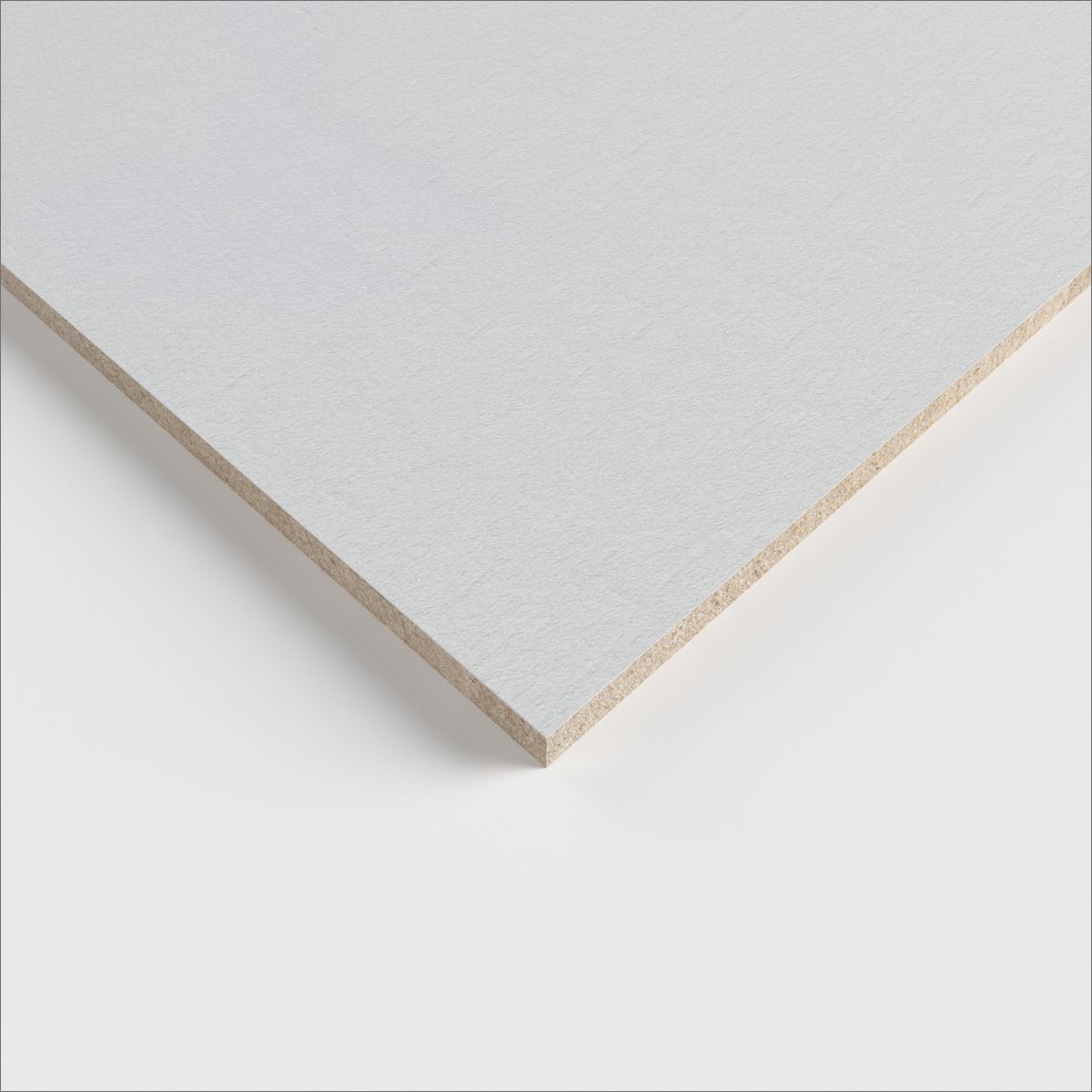
Smooth Mineral Fibre
Mineral fibre tiles are the most common type in the UK made of a combination of natural and recycled materials. These tiles have a smooth painted face with varying performance attributes.
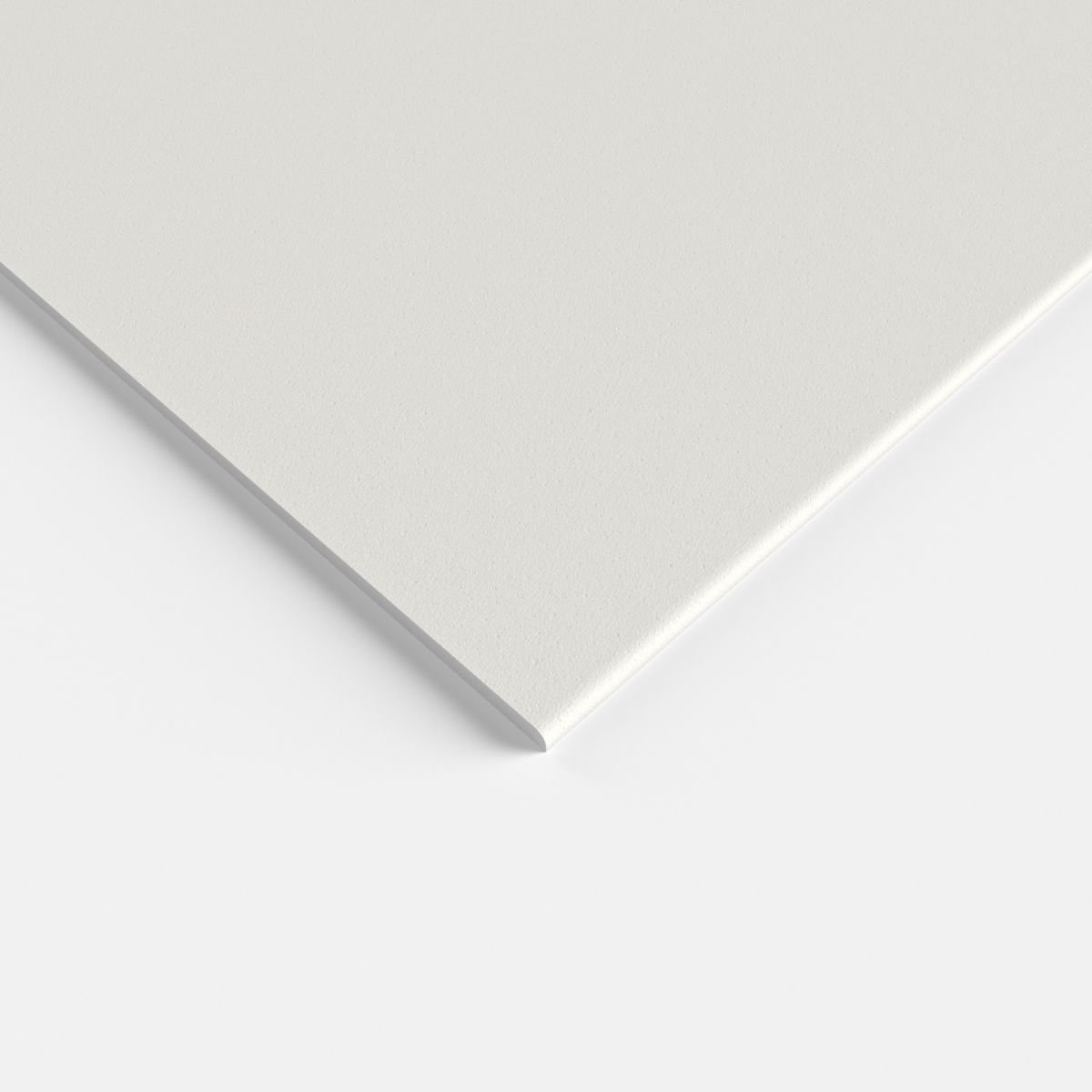
Smooth Wipeable
Tiles with a smooth wipe-clean surface for easy cleaning. Ideal for use in food preparation and clean room environments.
Edge Detail
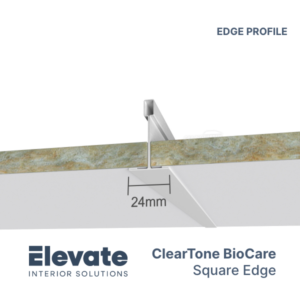
There are three main edge details for tiles, each can be found below. The 15mm/24mm measurement refers to the width of the grid which can be seen when looking up at the ceiling.
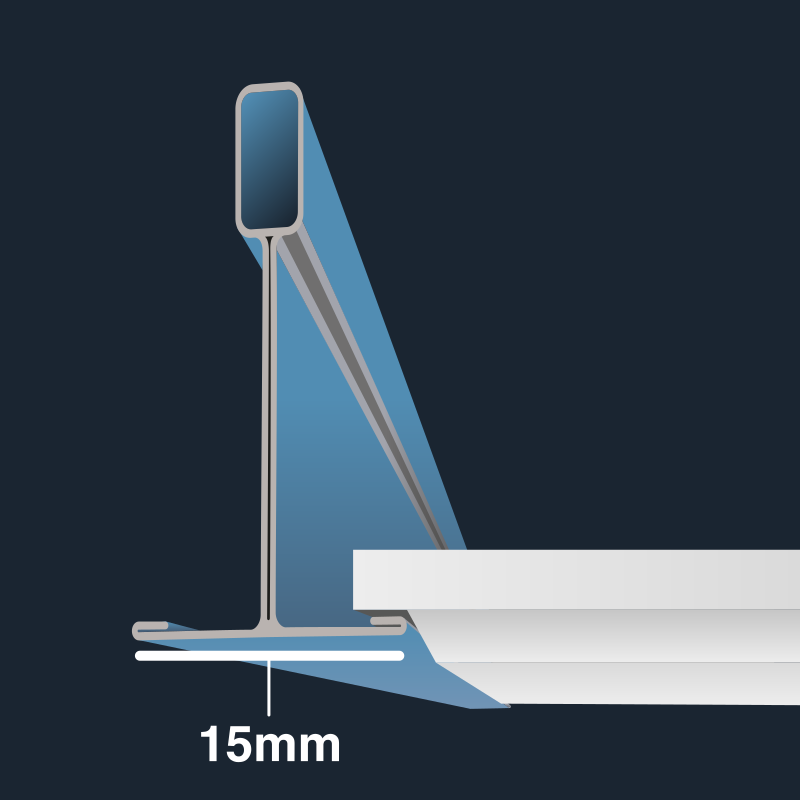
Reveal/Microlook (15mm Grid)
These tiles have a lip around the edge which means they sit below the grid slightly. The 15mm measurement refers to the width of the gridwork, it’s important to get this right as otherwise the tiles will not fit.
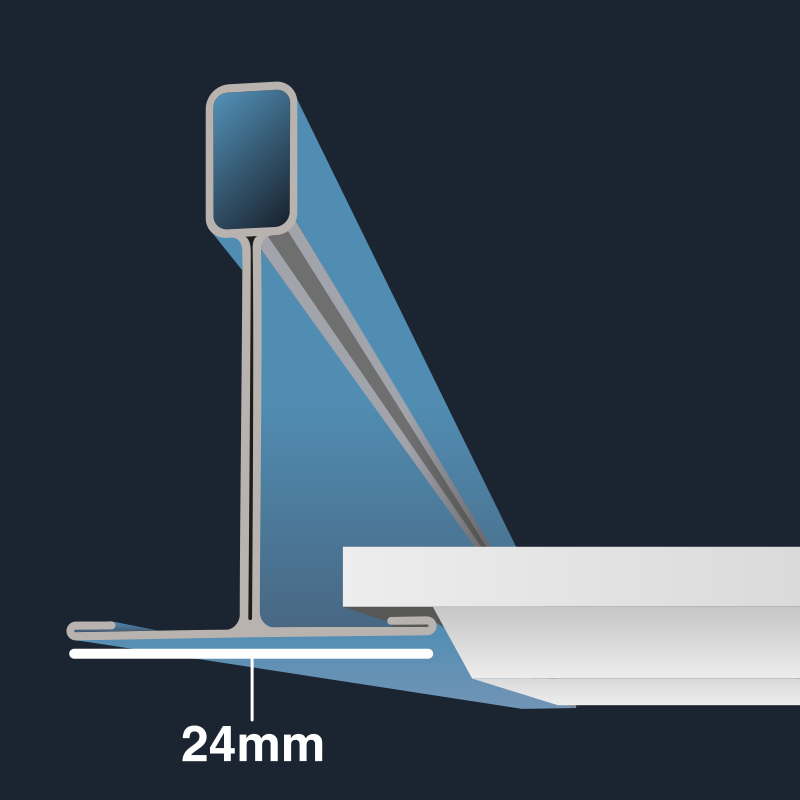
Reveal/Tegular (24mm Grid)
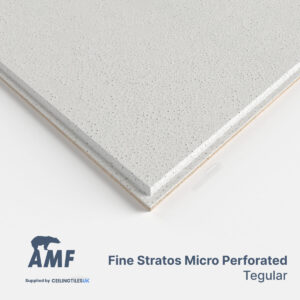
These tiles have a lip around the edge which means they sit below the grid slightly. The 24mm measurement refers to the width of the gridwork, it’s important to get this right as otherwise the tiles will not fit.
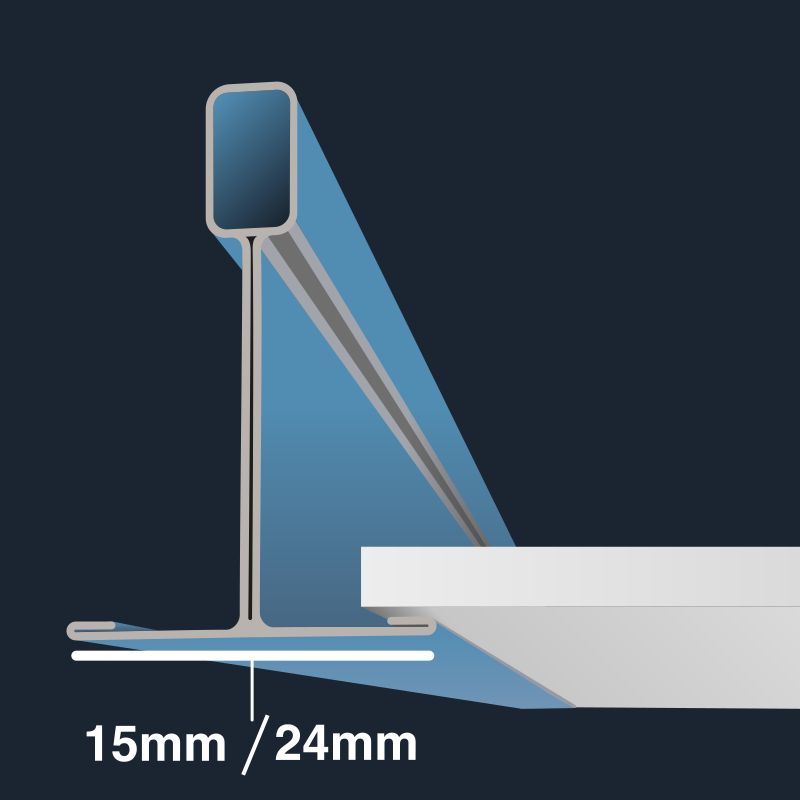
Square (15mm / 24mm Grid)
Square edge tiles sit flush with the ceiling grid, these will fit both 24mm and 15mm gridwork.
Edge Detail
There are two main edge details for metal tiles:

Clip-In (Metal Spring Tee)
These tiles clip into a Spring Tee Grid System using a ‘pip and stop’ feature, leaving no visible gridwork. These are sometimes referred to as ‘Metal Pan’ tiles, and require a pair of demounting tools to remove.
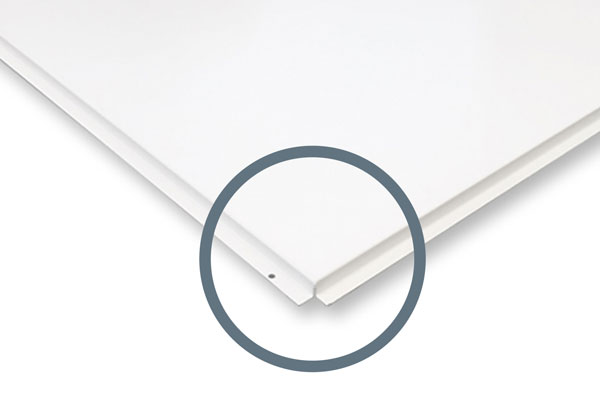
Lay-In Metal Tiles
These tiles have a lip around the edge which means they sit below the grid slightly. The gridwork the tiles sit in will be either 24mm or 15mm wide, it’s important to get this right as otherwise the tiles will not fit.